TUỆ GIÁC VÔ NGÃ
Thực tập cùng tổ tiên và con cháu
Khi thực tập nghe chuông, chúng ta nên mở rộng trái tim và thỉnh mời tất cả các thế hệ tổ tiên trong ta cùng nghe chuông (We have to allow our ancestors to listen to the bell at the same time). Đây là sự thực tập giúp chúng ta không giam hãm mình vào một cái vỏ bản ngã. Tất cả những thế hệ tổ tiên, trong đó có cha ta, mẹ ta đều đang ở trong mỗi tế bào của thân thể ta một cách rất cụ thể.
Sắc (rūpa) chứa đựng danh (nāma). Chúng ta cũng có thể nói rằng danh (nāma) chứa đựng sắc (rūpa). Nāma là tâm thức của ta, trong đó có cảm thọ, tri giác, tâm hành và nhận thức. Chúng ta nên học để thấy được rằng những tâm hành cũng được làm bằng những tế bào giống như những tế bào của cơ thể. Sự thật là những tế bào của cơ thể chứa đựng những tế bào của tâm thức, và những tế bào của tâm thức cũng chứa đựng những tế bào của cơ thể. Nāma-rūpa là hai mặt của một thực tại, không có cái nào có trước, không có cái nào có sau, cũng giống như sóng và hạt, the particle and the wave, là hai mặt của một thực tại. Sóng chứa đựng hạt cũng như hạt chứa đựng sóng.
Thực tại của chúng ta là thực tại danh sắc. Ta có thể gọi nó là danh và cũng có thể gọi nó là sắc. Sắc và danh là hai mặt biểu hiện của một thực thể. Khi nhìn vào một tế bào của cơ thể hay nhìn vào một tế bào của tâm thức, ta nhận diện được sự có mặt của tất cả các thế hệ tổ tiên trong ta. Đó là một sự thật.
Tổ tiên chúng ta không chỉ là loài người. Trước khi loài người biểu hiện trên trái đất thì chúng ta đã từng là những loài khác. Chúng ta từng làm cây, cỏ, đá, sương, làm con sóc, con nai, con khỉ, làm những sinh vật đơn tế bào. Tất cả thế hệ tổ tiên đều đang có mặt trong từng tế bào của cơ thể cũng như của tâm thức ta. Ta là sự tiếp nối của dòng sinh mạng đó. Vì vậy khi nghe chuông, ta không phải là một cái ta biệt lập, đơn độc đang nghe chuông mà là cả dòng sống trải dài nhiều thế hệ đang nghe chuông. Đây là sự thực tập vô ngã.
Trong đạo Bụt, chúng ta nói rất nhiều về vô ngã. Chúng ta nói rất hay, nói văng cả nước miếng, nhưng chúng ta lại không thực tập vô ngã. Khi nghe một tiếng chuông, chúng ta cho phép tất cả thế hệ tổ tiên và con cháu đang tiềm tàng trong từng tế bào cơ thể ta được nghe tiếng chuông đó. Như vậy là ta đang chứng nhập thực tại vô ngã mà Bụt nói tới. Chúng ta đang mang thực tại vô ngã trong cơ thể và tâm hồn. Đây không phải là một lý thuyết mơ hồ. Chỉ cần nghe chuông là ta đã thoát ra cái vỏ của bản ngã, thoát khỏi ngục tù khái niệm về bản ngã mà ta thường tạo tác ra. Chúng ta để cho tiếng chuông thấm vào tất cả các thế hệ quá khứ và các thế hệ tương lai vì vốn dĩ các vị đã có ở trong chúng ta rồi.
Chúng ta biết rằng một trái ổi dầu còn rất non thì cũng đã có những hạt ổi ở trong. Chúng ta cũng vậy. Chúng ta mới 14 tuổi. Chúng ta nghĩ rằng mình chỉ có thể làm con, làm em thôi, nhưng kỳ thực, chúng ta đã bắt đầu làm mẹ, làm bà rồi.
Một chú tiểu 12, 13 tuổi tuy đóng vai trò một người đệ tử nhưng chú tiểu đó đã có đệ tử, đã có đệ tử của đệ tử trong con người của chú rồi. Vì vậy khi nghe chuông, chú cần mở lòng ra để các thế hệ tổ sư, các thế hệ cha mẹ, ông bà huyết thống cùng được nghe và chú cũng có thể mở lòng ra cho các thế hệ đệ tử, con cháu của chú trong tương lai cũng được nghe. Khi nghe một tiếng chuông như vậy là chú đang chạm vào sự mầu nhiệm của vô ngã mà không cần thuyết pháp. Nghe chuông như vậy mới là thượng thừa.
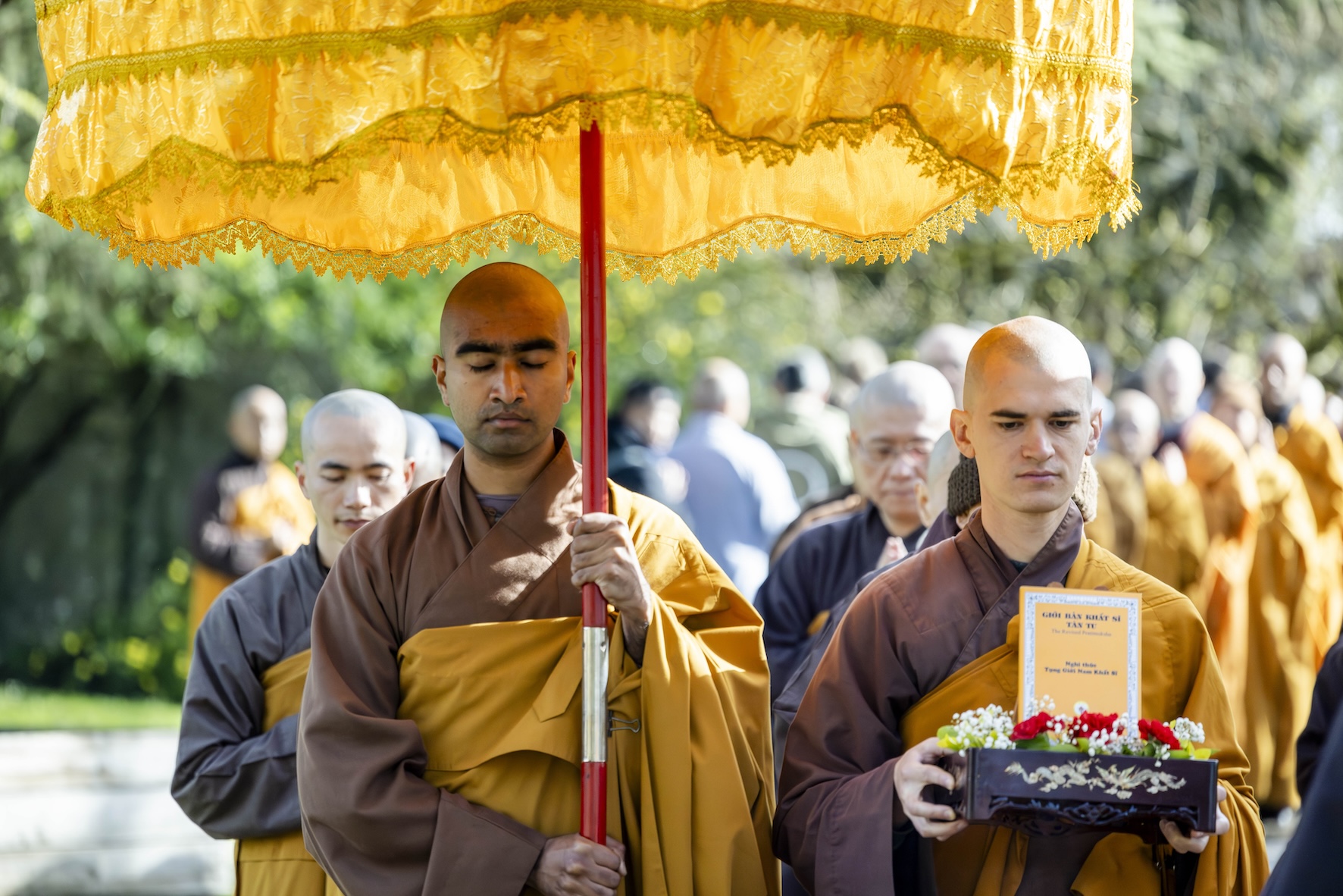
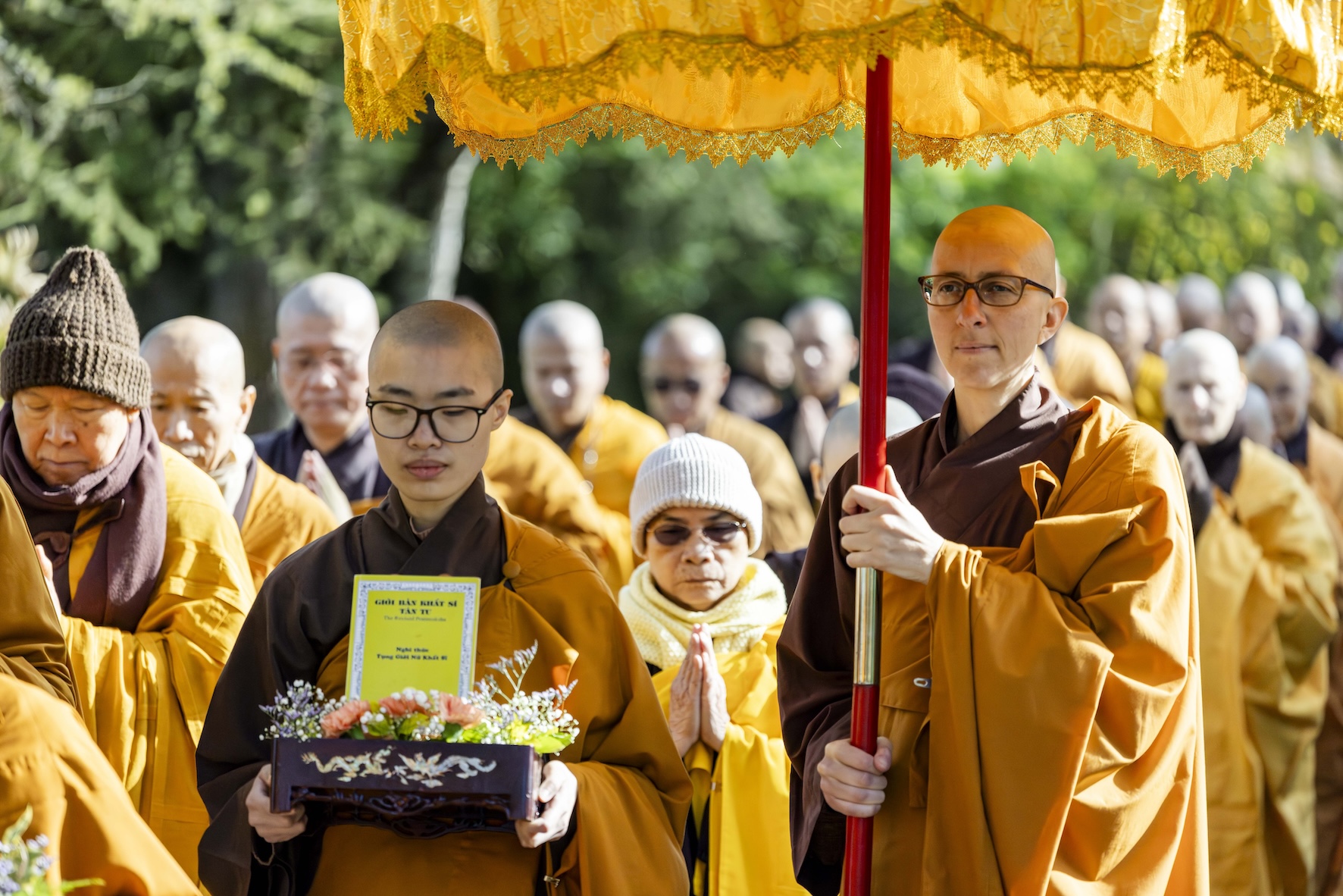
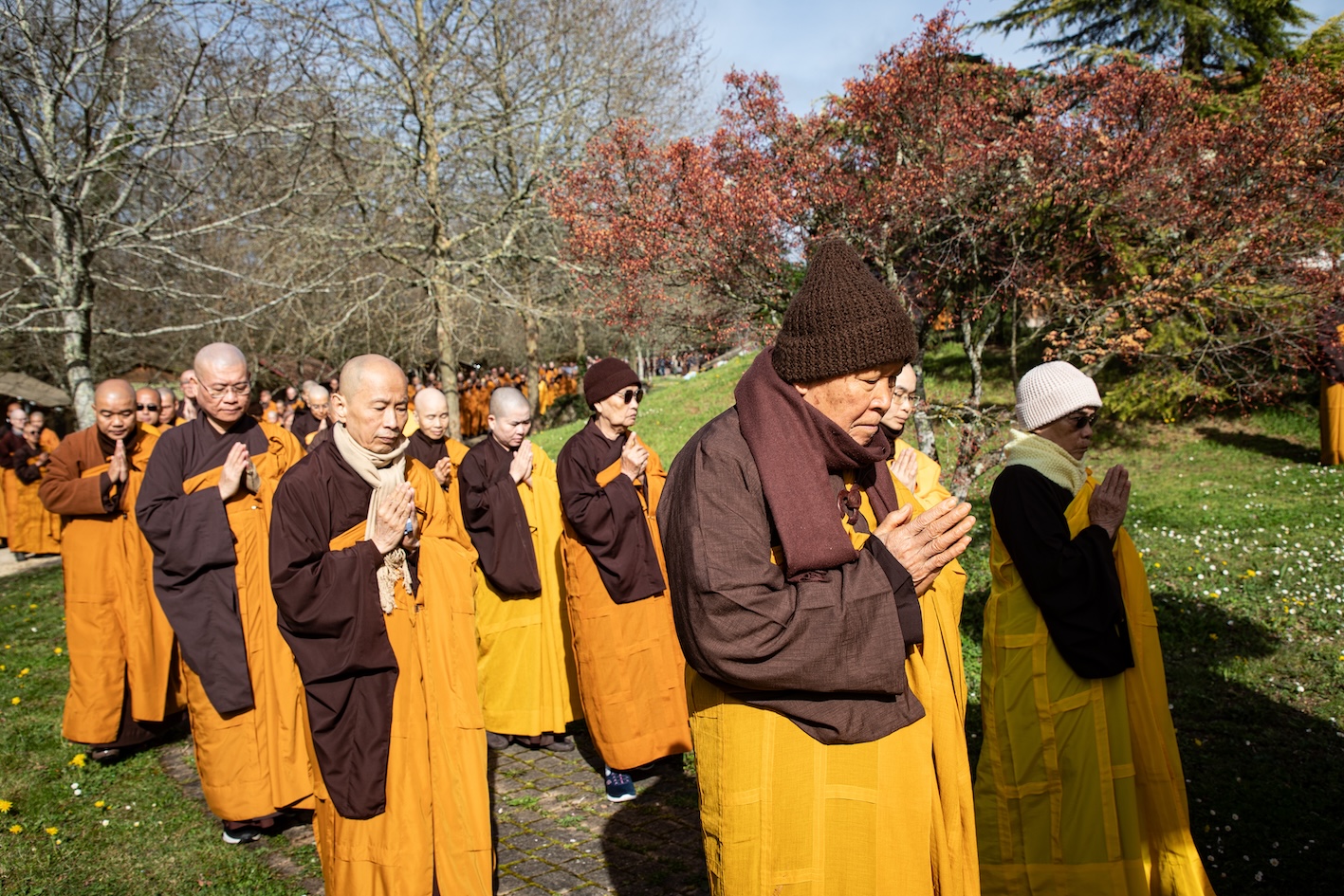
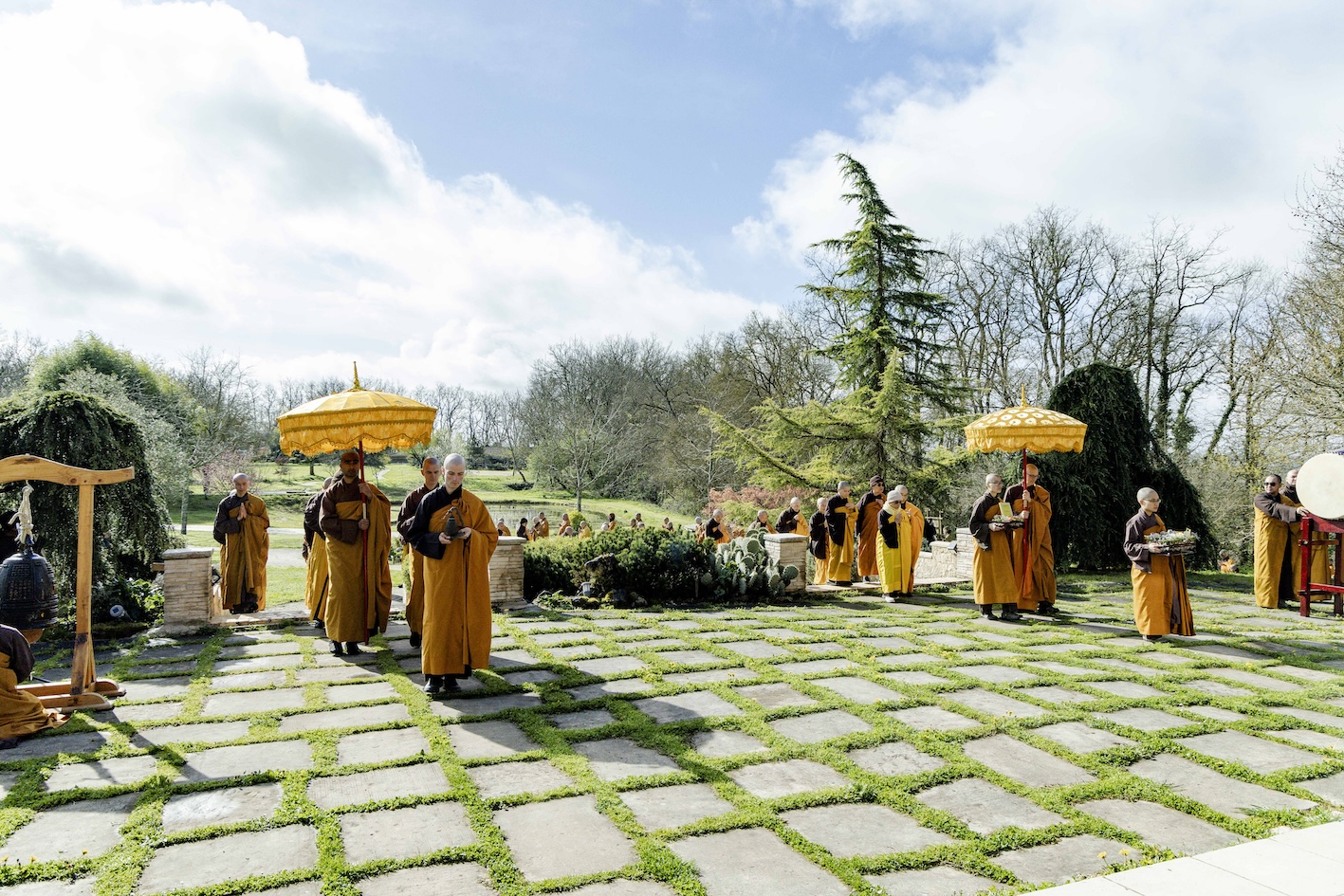
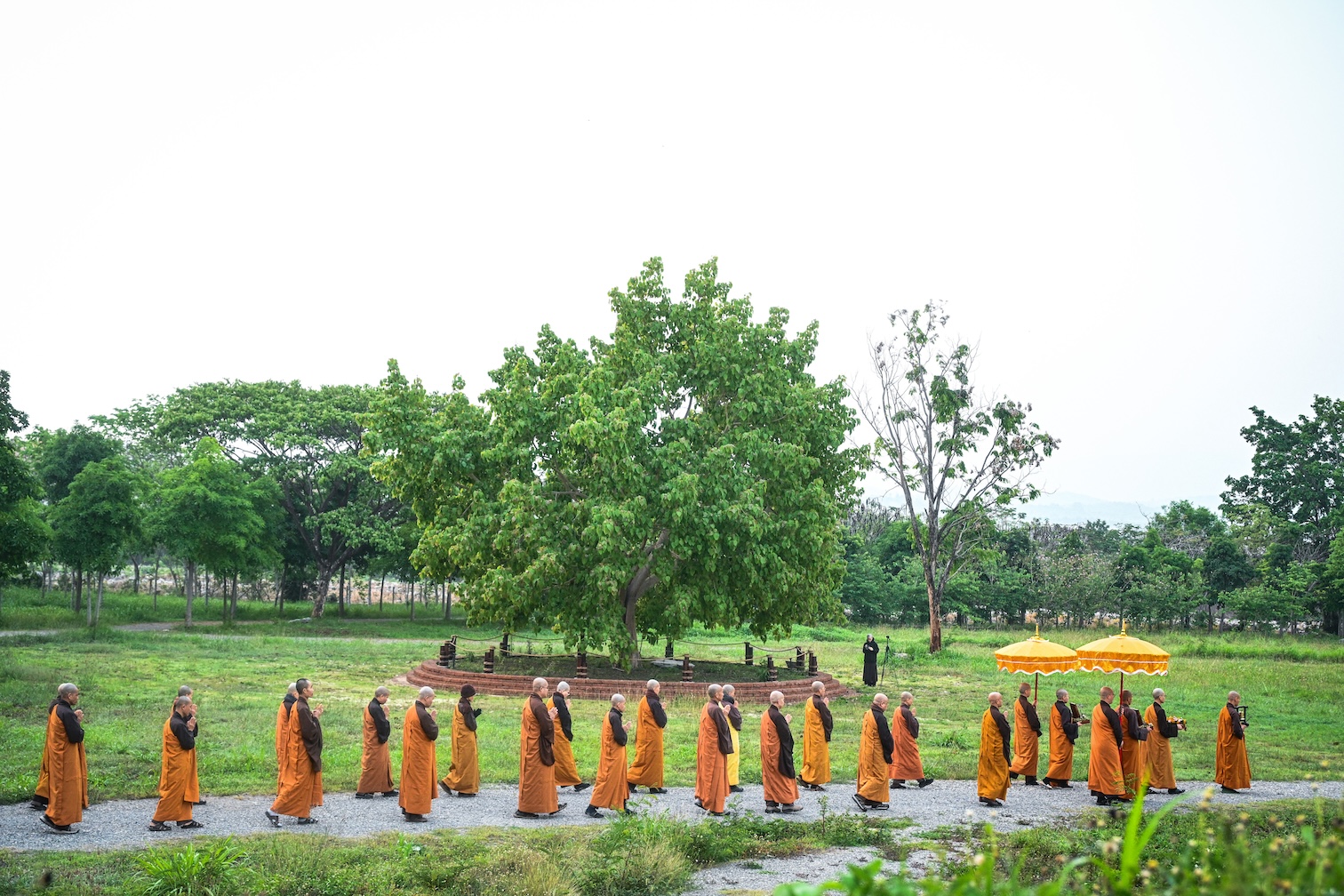
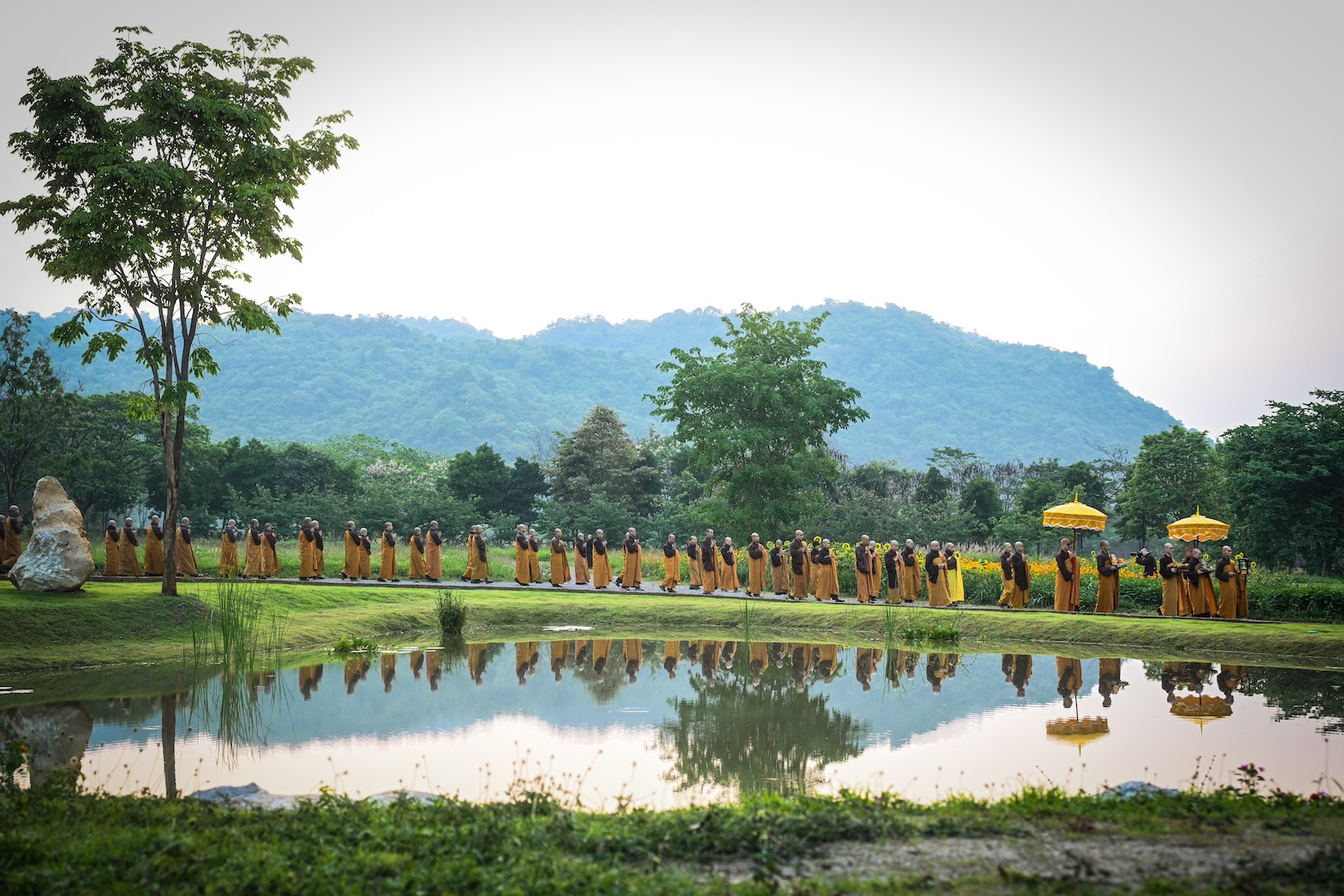
Khi bước những bước chân thiền hành trên bãi cỏ xanh non mùa xuân, ta bước đi như thể tất cả tổ tiên của chúng ta cùng bước theo. Sự an lạc, thảnh thơi mà ta đạt được trong khi bước đi có thể thấm vào tất cả các thế hệ tổ tiên quá khứ và thế hệ con cháu tương lai. Một bước chân như vậy là một bước chân thượng thừa. Cất một bước chân như vậy giúp ta tiếp xúc được với muôn ngàn bước chân đang bước chung với ta. Thở vào một hơi nhẹ nhàng, thoải mái, tĩnh lặng là ta đang thở cho tất cả các thế hệ tổ tiên và con cháu. Thở như vậy là hơi thở thượng thừa. Chúng ta có thể làm được.
Chỉ cần một ít niệm, một ít định, chúng ta có thể quán chiếu, có thể thấy được. Ban đầu, chúng ta dùng phương pháp quán tưởng – visualization. Ta thấy các thế hệ tổ tiên cùng ta đưa chân phải ra, đồng thời bước lên một bước với ta. Và từ từ không cần phải quán tưởng nữa, trong mỗi bước chân ta đưa ra, ta thấy được bước chân của tất cả tổ tiên trong quá khứ.
Trong khi nấu một món ăn truyền thống của dân tộc mà ta học được từ mẹ hay từ cha, ta hãy mỉm cười nhìn bàn tay của ta. Bàn tay này cũng là bàn tay của mẹ, của bà ngoại, bà nội đang làm món ăn. Đó là sự thật. Ta nào có tài ba gì đâu. Ta đâu có sáng tác ra cái này. Ta chỉ tiếp nối các thế hệ tổ tiên. Ta thấy được tất cả bàn tay của tổ tiên, của mẹ, của cha, hay của ngoại trong bàn tay của ta. Khi nấu cơm trong bếp, ta có thể quán chiếu thiền thượng thừa. Không cần phải lên thiền đường ngồi xuống mới thực tập. Chúng ta có rất nhiều cơ hội, vấn đề là có biết thừa hưởng cơ hội ấy hay không. Chúng ta có thầy, có tăng thân, có pháp môn, có đủ điều kiện để thực tập. Hãy tận dụng cơ hội để thực tập quán chiếu. Đây không phải là lý thuyết. Đây là thực tiễn của mỗi giây phút sống hằng ngày trong chánh niệm.
Ngày xưa, bà ngoại đã từng chơi bóng chuyền không? Không. Tại vì hồi đó chưa có bóng chuyền. Ngày xưa, bà ngoại có chạy bộ mỗi buổi sáng như ta không? Ngày xưa, bà ngoại có cơ hội thực tập hiện pháp lạc trú trong khi đi, trong khi chạy hay không? Bây giờ, ta – một người trẻ – đang chạy từng bước thảnh thơi, ta hãy để cho bà ngoại cùng chạy với ta. Thực sự là bà ngoại đang chạy với ta trong từng tế bào của cơ thể. Ta mang hết tất cả tổ tiên để chạy, để thiền hành, để thực hiện phép hiện pháp lạc trú. Các vị ngày xưa đã không có cơ hội, không có cơ duyên gặp gỡ chánh pháp và tiếp nhận phương pháp thực tập. Bây giờ, ta có cơ duyên gặp gỡ chánh pháp và pháp môn thực tập, tại sao ta không làm việc đó cho các vị? Trong khi thực tập thở, thực tập đi, thực tập chạy, chúng ta cũng đang đem lại niềm vui cho các thế hệ tổ tiên và con cháu.
Sống với xã hội ngoài kia, dưới thành phố kia, chúng ta không có điều kiện để đi, để thở, mỉm cười, nấu cơm, giặt áo trong chánh niệm. Chúng ta tạo ra khung cảnh của Làng Mai, một khung cảnh để ta dễ dàng thực tập hiện pháp lạc trú trong từng công việc. Chúng ta biết ơn những người đã yểm trợ, đã đem tâm huyết, thì giờ của họ ra góp phần tạo dựng một môi trường thực tập. Chúng ta làm như vậy là làm cho cả thế gian, làm cho quá khứ và cho cả tương lai. Chính nhờ bước đi, thở, mỉm cười, ngồi xuống, đứng lên như vậy mà chúng ta giải phóng được cho bao nhiêu thế hệ, giải phóng bằng cách thoát ra khỏi cái vỏ của bản ngã.
Tâm lý học phương Tây và tâm lý trị liệu phương Tây đều nhắm tới chữa trị, đem tới cho chúng ta một “cái ngã” gọi là vững chãi và lành mạnh. Họ có thể đem tới một ít sự chuyển hóa, sự trị liệu, nhưng vẫn chưa đi được xa vì họ còn kẹt nhiều vào ý niệm về ngã. Tâm lý trị liệu phương Tây giả định có một trạng thái mà con người cảm thấy thoải mái, lành mạnh, an lạc. Vì những lý do, những tai nạn nào đó mà chúng ta đã đánh mất trạng thái thoải mái, lành mạnh, an lạc, cho nên mục đích của trị liệu là tìm lại, phục hồi, restore trạng thái đó. Bây giờ ta thực tập làm thế nào để vượt khỏi những tai nạn và trở về trạng thái an lạc, thoải mái, vô bệnh.
Trong ánh sáng thực tập của đạo Bụt, chừng nào ta còn kẹt vào ý niệm của một cái ngã riêng biệt thì chừng đó vô minh đang còn trong tâm thức, trong danh sắc của ta. Thực tập vô ngã là thoát ra khỏi ý niệm hẹp hòi của bản ngã, thấy được liên hệ mật thiết giữa ta và không ta. Khi vô minh tiêu tán thì tất cả những khổ đau, giận hờn, tủi hận, ganh ghét, sợ hãi sẽ tan biến. Kết quả đạt được từ sự thực tập đó sẽ lớn bằng ngàn, bằng vạn lần sự chữa trị căn cứ trên ý niệm của một bản ngã. Vì vậy cho nên thực tập vô ngã là sự chữa trị tuyệt vời nhất.
Nẻo về tiếp nối đường đi
Những người đang có vấn đề về tâm lý thường tự hỏi: “Tôi là ai? Hồi xưa, cha và mẹ tôi đến với nhau, họ có muốn tôi ra đời hay không? Hay là họ chỉ tới với nhau một cách cạn cợt và vô tình, sau đó tôi ra đời. Họ muốn có tôi thật không? Hay là tôi ra đời như một tai nạn?Nếu như vậy thì tôi tủi hổ lắm. Đời tôi có ý nghĩa gì không?”. Tất cả những câu hỏi đó đưa đến rất nhiều khổ đau, tại vì ta kẹt vào ý niệm về bản ngã.
Một đứa nhỏ lớn lên, nghe rằng cha mẹ đã từng muốn phá thai khi mình còn trong bụng mẹ thì nó đau khổ vô cùng. Từ đau khổ đó sinh ra không biết bao nhiêu chứng bệnh. Tâm lý trị liệu có thể giúp gì cho những đứa trẻ như vậy?
Đời tôi có ý nghĩa gì không? Tôi từ đâu tới? Tôi là ai?… Những câu hỏi đó có thể là nguyên nhân của những khổ đau trong một kiếp người. Nếu chúng ta quán chiếu theo phương pháp Bụt dạy, thấy được thực tính vô ngã, ta sẽ không còn hỏi những câu như vậy. Đó là một trong những điểm cốt yếu chúng ta học được từ kinh Trung đạo nhân duyên.
Trước hết, ta thấy được ta là sự tiếp nối của dòng sinh mạng. Chuyện cha mẹ có muốn ta ra đời hay không không quá quan trọng. Có thể cha mẹ ta không muốn ta ra đời, hay chưa muốn ta ra đời, nhưng ông bà tổ tiên luôn muốn ta ra đời. Đó là một sự thật. Ông bà chúng ta luôn muốn có sự tiếp nối. Nếu không phải thế hệ này thì thế hệ khác, chắc chắn luôn có một thế hệ rất muốn ta ra đời để tiếp tục dòng sinh mạng của tổ tiên. Câu trả lời đó có thể làm cho ta bớt đau khổ hoặc hết đau khổ. Cha mẹ của ta, giống như bất cứ một cặp cha mẹ nào, cũng có lúc lên lúc xuống, có khi đầy thương yêu nhưng cũng có khi đầy giận hờn. Những thương yêu, giận hờn đó không chỉ từ họ mà còn là sự trao truyền từ những thế hệ khác. Thấy được điều đó, ta không trách cha mẹ nữa. Ta thấy cha mẹ cũng như ta, có những lúc rất giỏi nhưng cũng có những lúc rất yếu kém.
Ở Á đông, có khi ta bị ép gả cho một người con trai mà mình không thương. Chúng ta oán trách cha mẹ. Nhưng có thể sau hai năm, ba năm chung sống, ta khám phá ra người con trai này là một người rất ngọt ngào, dễ thương. Ta bắt đầu cảm ơn cha mẹ. Cha mẹ đã có tuệ giác như thế nào đó và cha mẹ đã là một nhân duyên rất tốt đẹp để cho cuộc hôn nhân này được thực hiện. Ban đầu ta không thương người con trai ấy nhưng về sau thì ta rất thương.
Trong chúng ta, ai cũng có những người bạn, ban đầu mới gặp, chúng ta rất ghét, nhìn mặt là không muốn chơi. Nhưng không hiểu sao, chơi một hồi thì khám phá ra được đây là một người bạn rất tốt. Cho nên giây phút cảm thấy ghét đó không phải là vĩnh viễn, nó chỉ là một giây phút thôi và sau những giây phút đó sẽ là những giây phút rất thương. Vì vậy, ghét thương chỉ ở bề mặt, nằm sâu bên dưới còn có điều quan trọng hơn. Phải thấy được điều đó ta mới bớt buồn tủi, không cần phải hỏi rằng cha mẹ có muốn ta hay không. Có thể lúc đó cha mẹ không muốn, nhưng sinh ta ra rồi thì cha mẹ thương quá chừng. Tình thương đó bù đắp lại tất cả. Ta thấy ta là cha mẹ, là ông bà, ta vượt thoát ý niệm ngã và không còn đau khổ vì câu hỏi “Ai-je été désiré?”, “Cha mẹ tôi muốn tôi ra đời hay không?”. Thực tập theo pháp môn vô ngã của đạo Bụt, ta giải phóng được cho chính ta và giải phóng được cho biết bao thế hệ tổ tiên và con cháu tương lai trong chúng ta.
Nhiều người trong chúng ta đã đi qua những giai đoạn rất khó khăn trong thời thơ ấu. Chúng ta bị thương, khủng hoảng tinh thần rất nặng. Vì vậy chúng ta thường không muốn nhớ lại những giai đoạn khổ đau đó. Trong ta luôn có một cơ chế tự tồn, tự vệ, mécanisme de défense, defense mechanism. Mỗi khi tiếp xúc với những kỷ niệm đau buồn, ta chịu không nổi, cho nên cơ chế tự tồn, tự vệ sẽ tìm cách chôn vùi những kỷ niệm đau thương kia vào đáy sâu của tâm thức. Khi có một người nào khơi lại những mối thương tâm thì ta đau, ta buồn, ta không ăn cơm được trong một ngày, hai ngày, ba ngày.
Nhưng chạy trốn không phải là phương pháp tốt nhất, không phải là thượng sách. Đạo Bụt dạy chúng ta phải thực tập chánh niệm, phải chế tác năng lượng của chánh niệm và phải trở về ôm lấy đứa trẻ đang bị thương nặng trong ta. Đứa trẻ trong ta có thể đang mang thương tích rất nặng, nhưng vì không đủ sức mạnh cho nên suốt mấy chục năm qua, ta chỉ muốn trốn tránh và không dám gặp mặt. Vì vậy, đứa trẻ bị thương tích trong ta vẫn tiếp tục đau khổ, nó không được thừa nhận. Nó đòi hỏi sự thừa nhận và săn sóc, nhưng chúng ta đang làm ngược lại. Chúng ta sợ khổ nên chúng ta luôn luôn trốn tránh và cự tuyệt em bé trong ta.
Đạo Bụt dạy những phương pháp thực tập để chế tác năng lượng chánh niệm. Với năng lượng chánh niệm, ta không còn sợ hãi, ta trở về, gọi đích danh, ôm ấp và nói chuyện với đứa trẻ trong ta. Trước hết là nhận diện: “Này em bé trong tôi đang bị thương tích, tôi biết em còn đó. Trong những năm vừa qua, tôi rất tệ bạc, tôi bỏ em một mình bơ vơ với những vết thương nặng nề của em. Bây giờ tôi đã trở lại. Xin em cho phép tôi được ôm em vào lòng. Tội nghiệp em quá.” Ta phải nói chuyện và ôm ấp em bé. Nếu cần, cả hai chị em/ anh em cùng khóc với nhau, trong khi đang thiền tọa với đại chúng cũng được mà ngồi một mình trong rừng cũng được. Hãy nói chuyện với em bé bằng ngôn ngữ vắng lặng. Em bé với ta không phải hai mà cũng không phải là một.
Trong chúng ta, những người thực tập theo phương pháp đó một thời gian đã có sự chuyển hóa và trị liệu. Sau đó, mối liên hệ của ta với người anh, người chị, người em, người bạn của ta trở thành dễ dàng hơn, ta có nhiều hiểu biết, nhiều thương yêu và nhiều bình an hơn. Khi trở về chữa trị được cho đứa trẻ bị thương trong ta rồi thì ta có đủ sức mạnh, ta có thể hiểu người khác hơn. Bởi vì những người xung quanh ta, người anh, người chị, người em kia có thể cũng có một đứa bé bị thương nặng bên trong và ta có thể giúp được cho người đó.
Đạo Bụt dạy chúng ta thấy đứa bé bị thương trong ta không phải chỉ là ta, mà có thể là mẹ ta hay cha ta. Suốt cuộc đời, cha mẹ ta đã từng khổ đau. Vì chưa gặp chánh pháp, chưa biết phương pháp thực tập cho nên những đứa bé trong họ chưa bao giờ được thừa nhận, ôm ấp và trị liệu. Ta thực tập ôm lấy đứa bé trong ta, ôm lấy tất cả những đứa bé trong quá khứ của nhiều thế hệ và ta vỗ về, trị liệu cho cha, cho mẹ, cho ông bà nội ngoại và các thế hệ tổ tiên. Sự thực tập này không phải là thực tập cho cái ngã của riêng ta mà là thực tập cho các thế hệ tổ tiên quá khứ và con cháu tương lai.
Nếu không làm bây giờ thì bao giờ ta mới làm? Có thầy, có bạn, có tăng thân mà ta còn không chịu làm thì bao giờ ta mới làm! Làng Mai không phải là một trường dạy lý thuyết. Những năm tháng ở đây không phải vì mục đích tiếp nhận một mớ kiến thức Phật học để sau này đi dạy hay đi làm. Làng Mai là một môi trường ta có thể thực tập để ôm ấp và chuyển hóa đứa trẻ bị thương tích trong ta. Đứa trẻ bị thương tích luôn luôn có mặt, luôn luôn trông chờ, nhưng ta đã bỏ bê nó từ lâu. Bây giờ ta phải trở về, nhận diện, công nhận sự có mặt của nó, ôm lấy nó, cùng khóc với nó và dùng năng lượng chánh niệm để chăm sóc vết thương cho nó.
Trong ánh sáng của kinh Trung đạo nhân duyên, ta biết rằng em bé bị thương trong ta không phải chỉ là ta mà nó cũng là em bé của những thế hệ trước. Nó là em bé bị thương của mẹ, của cha, hay của ông bà nội ngoại. Ta tu là tu một lần cho tất cả các tổ tiên của ta.
Em bé đó đang ở đâu? Em bé đó đang nằm trong tất cả các tế bào nơi cơ thể ta, những tế bào của danh và những tế bào của sắc. Trong mỗi tế bào của tâm thức, trong mỗi tâm hành đều có em bé đang nằm co ro, bơ vơ, bị thương rất nặng. Ta phải trở về. Ta không cần đi tìm đâu xa, không cần tìm về quá khứ 300 triệu năm trước, không cần tìm về những thời đại thạch khí, không cần tìm về thời ấu thơ hoặc là thời của ông cố, ông ngoại, tại vì tất cả những dữ liệu đó, những sự thật đó, những nỗi đau đó, những em bé bị thương đó hiện bây giờ đang nằm ngay trong giây phút hiện tại, trong từng tế bào của danh và của sắc nơi ta. Tout est inscrit dans chaque cellule de votre corps, de votre esprit. Những thương tích, những nỗi đau buồn, những đứa bé bị thương đang có mặt trong mỗi tế bào của ta; cũng như tuệ giác của tổ tiên, tuệ giác của Bụt, hạnh phúc của Bụt đang có mặt trong từng tế bào của cơ thể và tâm thức ta. Ta phải biết trở về, biết tận dụng những yếu tố hạnh phúc, những tuệ giác đó để chế tác năng lượng chánh niệm, năng lượng thương yêu, mà ôm ấp lấy đứa trẻ bị thương. Đau thương nằm trong từng tế bào, mà hạnh phúc và tuệ giác cũng đang nằm trong từng tế bào của ta.
Bụt tổ đã trao truyền, thầy đã trao truyền cho ta tuệ giác vô ngã, tương tức, và tuệ giác đó đang nằm trong mỗi tế bào của ta. Ta không cần đi tìm đâu xa, ta chỉ cần trở về. Với mỗi hơi thở, với mỗi bước chân, ta chế tác năng lượng của chánh niệm, của tuệ giác. Chính năng lượng đó giúp ta thừa nhận và ôm ấp đứa trẻ bị thương trong ta.
Chúng ta là những người có chất liệu u mê trong từng tế bào của cơ thể và của tâm thức. Chất liệu u mê đó là gì? Danh từ Phật học gọi là vô minh. Vô minh tức là không có ánh sáng, không thấy. Những cái nằm sờ sờ ở đó mà ta không biết được rằng nó có mặt. Đó là vô minh.
Đứa trẻ bị thương nằm đó, rất thực mà ta đâu có biết. Em bé đang bị thương rất nặng, rất cần ta trở về để công nhận, để ôm ấp, nhưng vì vô minh nên ta mãi rong ruổi, ta vẫn không biết là em đang có mặt. Đó là sự u mê. Ta đi tìm danh, tìm lợi, tìm cái gì đâu đâu. Trong khi đó, ta không nhận thức được những gì đang thực sự xảy ra ngay trong ta. Chất liệu vô minh, sự u mê tạo ra những nguồn năng lượng bệnh tật nơi thân tâm ta. Khi chất liệu vô minh có trong mỗi tế bào của cơ thể và tâm thức, ta gọi đó là giọt mực đen hòa vào trong ly nước. Ở đây cũng vậy. Chất liệu vô minh hòa vào trong tất cả các tế bào tâm thức khiến ta không thấy được sự thật và đẩy ta đi về hướng tối tăm, khiến ta làm những điều dại dột tạo ra nhiều khổ đau, nhiều thương tích cho ta và cho những người khác.
Những động lực, những năng lượng u tối đó gọi là hành. Mỗi ngày chúng ta luôn bị hành thúc đẩy mà không nhận ra. Chúng khiến ta nói và hành động một cách u mê vì bản chất của hành là vô minh. Ta buồn, giận, ganh, trách,… tất cả những cái đó là năng lượng của hành. Ta không thấy rõ được sự vận hành của hành. Chúng nằm trong tâm thức của ta. Tâm thức của ta là vọng thức, chứa đầy chất liệu của vô minh và của hành. Tâm thức là đối tượng của tâm lý học, có những phần bề mặt và những phần thâm sâu. Phần bề mặt gọi là ý thức. Phần thâm sâu gọi là tàng thức, phương Tây gọi là vô thức, unconsciousness. Tâm lý học phương Tây cũng nói về tiềm thức, subconscious. Chúng đều là những vùng của A lại da (thức thứ tám trong Tâm lý học Phật giáo). Chúng ta thường chôn giấu những nỗi khổ niềm đau, hay những kỷ niệm buồn. Chúng ta dìm em bé bị thương xuống sâu trong vô thức, khiến nó ngạt thở dưới đó, kêu cứu dưới đó mà chúng ta vẫn nhởn nhơ đi lo chuyện vẩn vơ. Tất cả những cái đó đều là vô minh. Vô minh tạo ra tâm thức hiện thời của chúng ta.
Thức được biểu hiện thành danh sắc, the mental and the physical, nāmarūpa. Vì vậy trong mỗi tế bào của cơ thể (sắc) và trong mỗi tế bào của tâm hồn (danh) đều chứa đựng A lại da thức (tiềm thức, vô thức) – những năng lượng của vô minh. Năng lượng vô minh thúc đẩy chúng ta sống đời sống hằng ngày một cách cạn cợt và dại dột để tiếp tục gây đau khổ cho chính ta và cho những người xung quanh.
Pháp môn chúng ta học hỏi và hành trì là làm thế nào để bên cạnh vô minh phát sinh được minh, bên cạnh bóng tối có ánh sáng. Chúng ta đi trong đêm tối nên chúng ta mới sờ soạng, mới làm những điều trái ngược mà đáng lý không nên làm. Chúng ta thấy rằng cần phải có ánh sáng được thắp lên từ một cây đèn. Nhưng cây đèn lấy ở đâu ra? Cây đèn cũng lấy từ trong danh sắc của chúng ta. Trong danh sắc có chất liệu của thức, của hành, của vô minh mà trong danh sắc cũng có hạt giống của minh. Chúng ta đã được trao truyền từ tổ tiên tâm linh và tổ tiên huyết thống những hạt giống của thương yêu, hiểu biết. Bụt đã trao truyền, Tổ đã trao truyền, thầy đã trao truyền cây đèn cho ta nhưng ta tiếp nhận rồi cất đi mà không đem ra thắp sáng. Cây đèn đó là cây đèn chánh niệm. Dầu của cây đèn là hơi thở, bước chân, nụ cười, sự chấp tác trong chánh niệm. Phải thắp cây đèn chánh niệm lên thì tự nhiên ánh sáng tỏa chiếu và bóng tối giảm thiểu. Đó gọi là minh. Những giây phút minh biểu hiện thì vô minh rút lui và những năng lượng ma quái không tiếp tục được chế tác.
Minh ở đây là tâm bồ đề, đại nguyện, tâm thương yêu. Tâm thương yêu cũng mang năng lượng như hành, nhưng hành là thứ năng lượng được thúc đẩy bởi u mê, còn đây là một thứ năng lượng được soi sáng. Khi ánh sáng được thắp lên, thay vì bị những năng lượng mù quáng thúc đẩy thì ta được một năng lượng khác rất sáng nâng đỡ, đó là năng lượng của hiểu biết, thương yêu và bồ đề tâm.
Khi có năng lượng của bồ đề tâm, tâm thức của chúng ta sáng tỏ, đó là trí, prajñā. Trí và thức cùng một bản chất. Ta gọi là thức khi nào bị vô minh và hành chi phối. Còn khi được minh và bồ đề tâm soi sáng, nuôi dưỡng thì thức mà ta gọi ngày xưa, bây giờ có tên là trí.
Nếu có trí tuệ và sự thương yêu của bồ đề tâm thì trong từng tế bào của cơ thể, của tâm hồn ta có chất liệu của hạnh phúc. Bấy giờ, thay vì có danh sắc thì ta có thân thị hiện. Ta cũng có thể gọi danh sắc nhưng trong trường hợp này gọi là thân thị hiện, cũng có thân, có mắt, tai, mũi, lưỡi, đủ hết nhưng trong mỗi tế bào đó, tế bào nào cũng có sự thương yêu, có bồ đề tâm, có minh và có sự hiểu biết. Vì vậy, chìa khóa của sự thực tập là thắp lên một ngọn đèn.
Nghệ thuật thắp đèn trong tâm
Chúng ta có một bài kệ rất hay mỗi khi thắp đèn:
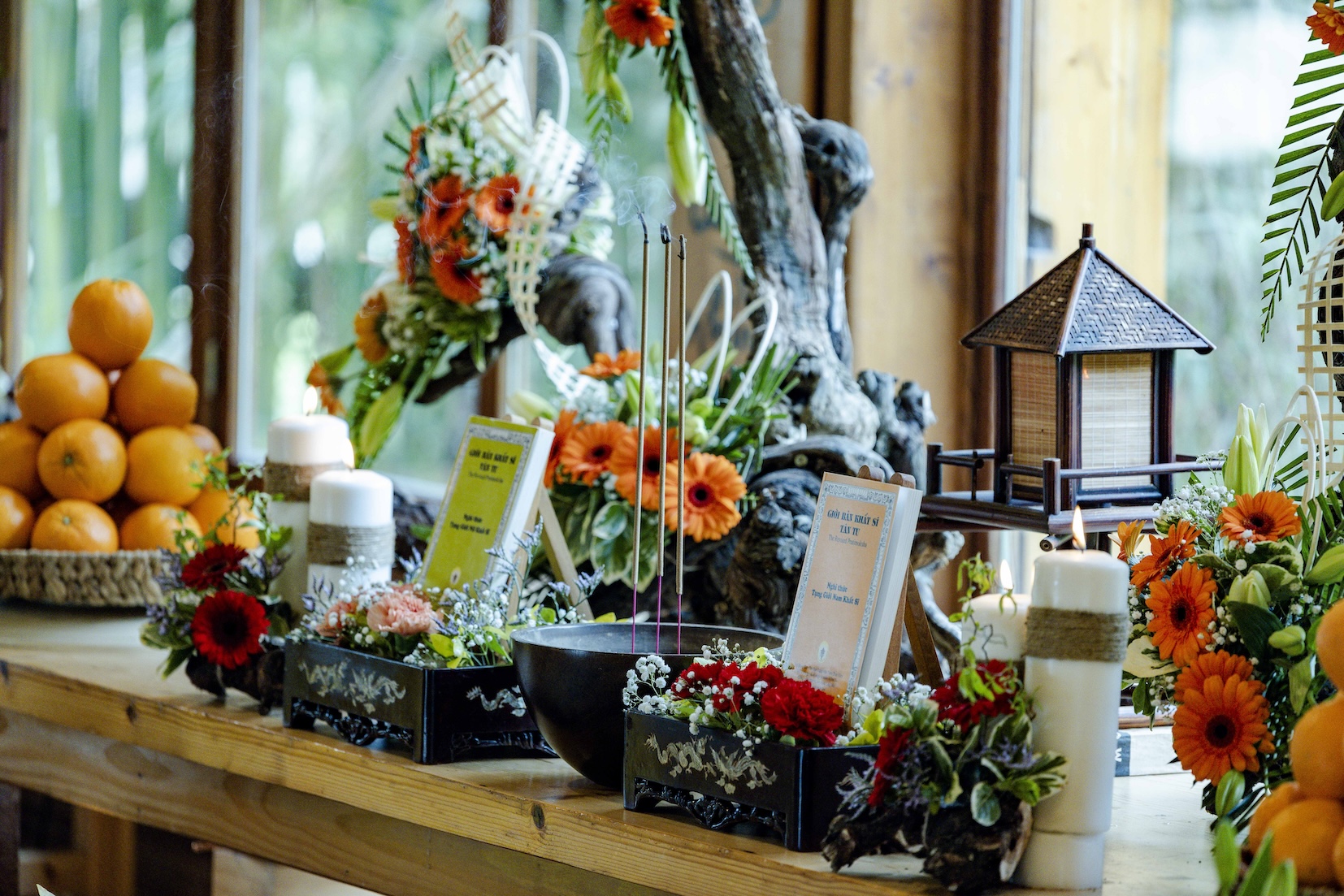
Thắp lên một ngọn đèn
Cúng dường vô lượng Bụt
Một tâm niệm an lành
Làm rạng ngời mặt đất.
Trước khi thắp đèn hay bật đèn, ta thở, mỉm cười và đọc lên bài kệ đó. Một mặt ta thấy ánh sáng tỏa chiếu trong phòng, một mặt thì vô minh trong tâm nhường chỗ cho minh. Ánh sáng phát sinh một lần trong hai lĩnh vực. Trong phòng ta ở là ánh sáng của điện; trong tâm ta là ánh sáng của minh, của chánh niệm. Ta thực tập bài thi kệ này để có hai thứ ánh sáng cùng một lúc. Nếu chỉ bật hay thắp đèn thông thường thôi thì chỉ có một thứ ánh sáng, ánh sáng của điện hay ánh sáng của đèn cầy.
Thi kệ thực tập chánh niệm rất quan trọng. Ai mới vào tu cũng được học trước tiên. Thi kệ chánh niệm là gì? Là nghệ thuật thắp đèn trong tâm. Nếu không thắp đèn thì làm sao anh có ánh sáng trong tâm và vô minh bao giờ mới trở thành minh được.
Thắp ngọn đèn sáng lên rồi, ta bắt đầu thấy được em bé thương tích trong ta đã bị bỏ quên, rất tội nghiệp. Ta thấy rằng ta phải thực tập bước chân và hơi thở cho vững chãi để chế tác năng lượng chánh niệm và có thể trở về ôm lấy, an ủi và chữa trị cho em bé. Nếu ánh sáng đó lớn, rõ và đầy đủ, ta có thể thấy được em bé không phải chỉ là ta mà cũng là mẹ ta, là cha ta. Mẹ ta đã từng khổ đau. Cha ta đã từng khổ đau. Cha mẹ ta chưa có cơ hội ôm lấy em bé trong họ. Bây giờ, ta làm chuyện đó cho cha mẹ, ta phải thấy em bé trong ta cũng là cha ta, là mẹ ta. Thử hỏi có cái hiếu nào lớn hơn cái hiếu này không? Đạo Nho nói rất nhiều tới chữ hiếu nhưng có cái hiếu nào sâu tuyệt, cao vời bằng cái hiếu của Phật giáo không? Khi ta mỉm cười, ta cũng mỉm cười cho cha, cho mẹ. Ta giải phóng cho cha, cho mẹ và cho tổ tiên.
Nếu thực tập được như vậy thì những câu hỏi làm cho ta đau khổ da diết như: “Tôi là ai? Ba má tôi có thực sự muốn tôi ra đời hay không? Đời tôi có ý nghĩa gì không?”… đều trở thành vô nghĩa. Trong kinh Duyên sinh, kinh Đại không hay kinh Trung đạo nhân duyên, ta thấy rằng những câu hỏi trên làm cho người ta đau khổ vô cùng. Nhưng với sự thực tập thắp sáng ngọn đèn tâm, ta có thể vượt thoát những câu hỏi trên và những khổ đau do chúng gây ra không còn cần thiết nữa.
Không cần phải đi Ái Nhĩ Lan, Trung Quốc hay đi tới bất kỳ nơi nào khác mới tìm ra được gốc rễ của ta. Về tới quê xưa tìm gốc rễ. Chỉ cần ngồi đây, tiếp xúc được với những tế bào trong cơ thể là ta tìm được gốc rễ của ta, tại vì cha mẹ, ông bà, tổ tiên đang có mặt một cách đích thực trong từng tế bào của cơ thể ta. Và nói cho cùng, các loài vi khuẩn cũng là tổ tiên của ta và tuệ giác mà các loài truyền tới cho ta cũng bắt đầu từ lúc đó. Không những các loài hữu tình có tuệ giác, có thương yêu mà các loài ta gọi là vô tình cũng có tuệ giác và thương yêu.
Khoa học bây giờ nói đến sự sống như là một vật chất – la matière. Ban đầu vật chất ở dạng inerte, tức là trước khi có sự sống thì thế giới này, vũ trụ này là một loại càn khôn hỗn độn. Phương Đông gọi thế giới trước khi được thành lập là một khối càn khôn hỗn độn, trời đất hỗn độn. Phương Tây thích dùng chữ la soupe primitive. Ở trong đó có những điện tử, những giới tử, những vật chất, những tinh vân,… rất lộn xộn. Rồi la matière inerte – vật chất bất động, không có sự sống trở thành la matière vivante. Lúc ban đầu có những loài đơn tế bào rồi đa tế bào; có những loài nấm, những con amibe, những loài rêu, đến những loài lòng tong, cá; rồi sinh ra con người, gọi là la matière vivante. Nhưng họ luôn luôn dùng chữ matière vì họ bị ảnh hưởng và tin rằng ban đầu chỉ có vật chất (sắc), họ không biết rằng sắc bao gồm cả danh trong đó. Sắc chẳng qua là đối tượng của danh. Đối tượng của tưởng cũng là tưởng (Object of perception is also perception). Cái mà họ gọi la matière (matter, vật chất), là đối tượng của tri giác. Nó là tri giác, là danh, là tâm. Vì vậy cho nên, tâm (danh) ôm lấy vật mà vật (sắc) cũng ôm lấy tâm. Tâm với vật, theo đạo Bụt là hai khía cạnh của thực tại. Có khi nó hiện ra là tâm, có khi nó hiện ra là vật, nhưng kỳ thực nó không phải là vật cũng không phải là tâm. Cũng như chất điểm, particule élémentaire, ta gọi nó là sóng cũng không được mà gọi nó là điểm cũng không được, vì có khi nó hiện ra như là sóng, có khi nó hiện ra như là điểm. Nó là cả hai. Nó vừa là sóng, vừa là điểm. Đứng về phương diện hình thức, điểm không thể là sóng, sóng không thể là điểm. Particule và onde, hai cái đó làm sao là một được, nhưng sự thật hai cái là một. Cũng như chúng ta vừa là cha, vừa là con. Nếu đã là con thì làm sao là cha được? Kỳ thực, có khi ta biểu hiện là cha, có khi ta biểu hiện là con. Ta là con, ta đồng thời cũng là cha hay là mẹ. Trái ổi lúc sinh ra đã có những hạt ổi ở bên trong, trái ổi đó vừa là con và vừa là cha. Như vậy, thực tại biểu hiện có khi là cha, có khi là con, khi là sóng, khi là hạt, khi là danh, khi là sắc.
La matière inerte đã trở thành la matière vivante. Từ la matière vivante ta có la matière pensante. Và họ nói con người là la matière pensante, tức là cái sắc có suy tư hoặc sự suy tư biểu hiện ra sắc.
Khảo cổ học gọi con người từ loài leo trèo và đi khom, đến một giai đoạn nào đó, con người tự nhiên đứng thẳng trên hai chân. Từ đó con người được gọi là Homo erectus. Erectus nghĩa là đứng thẳng, trên hai chân. Sau đó, con người có tên là homo habilis, homo sapiens. Homo sapiens là con người có trí tuệ. Bây giờ có danh từ homo concius – con người có ý thức, con người có chánh niệm. Con người bắt đầu biết rằng ta có sinh có tử. Thở vào, tôi biết tôi thế nào cũng phải bệnh, tôi thế nào cũng phải già. Thở ra, tôi biết tôi thế nào cũng phải chết. Đó là con người có ý thức. Từ con người có ý thức đó, bắt đầu có sự lo lắng, ưu tư, sầu khổ, gọi là angoisse. Điều này làm phát sinh ra khá nhiều chứng bệnh.
Con người bắt đầu đặt vấn đề về đau khổ, về cái chết. Ý thức, trí tuệ nơi các loài khác tuy có nhưng nằm ở một mức độ thấp hơn, vì vậy không bị chi phối bởi những tư tưởng là ta đang đau khổ, ta sẽ già, sẽ chết, sẽ có thể biến thành hư vô. Các chủng loài khác không có các ý thức như vậy. Hoặc ý thức đó đang còn trong trạng thái sơ khởi, khổ đau không nhiều, đến khi cần chết thì chết, cần bệnh thì bệnh, chứ không cần phải lo lắng trước quá nhiều như con người. Con người đau khổ nhiều hơn là vì có angoisse, có ưu tư. Và chính cái angoisse này tạo ra triết học, đặt ra những câu hỏi: “Tôi là ai? Tôi từ đâu tới? Ngày mai tôi có còn không?” Những câu hỏi đó đã được đặt ra trong kinh Duyên sinh. Câu hỏi về quá khứ: Trong quá khứ có tôi hay không? Nếu có tôi thì tôi là con gì? Con đó đẹp không hay rất xấu? Trong quá khứ, tôi có thể là con cóc không? Trong tương lai, sẽ có tôi hay không? Nếu có tôi, tôi sẽ là con gì? Mặt của tôi có đẹp không? Đuôi của tôi có dài không? Cha mẹ tôi muốn có tôi không? Tôi ra đời có phải là do một tai nạn không? Có ai thương tôi không?… Những câu hỏi đó đều từ triết học angoisse mà ra, khiến cho ta bị bệnh tâm thần và đau khổ vô cùng.
Trong khi đó, khả năng ý thức và năng lượng chánh niệm là yếu tố cứu tinh cho con người và muôn loài. Chính ý thức chánh niệm giúp chúng ta biết rằng sự biến đổi sinh môi trên trái đất đang trở thành mối đe dọa cho tất cả các chủng loài, và tình trạng của trái đất đang lâm nguy là do sự tàn phá của con người. Con người đang ý thức được những đau khổ quanh mình về các phương diện áp bức chính trị, bất công xã hội, khai thác, điên loạn. Thấy được rồi thì chúng ta có khả năng dừng lại và giúp người khác dừng lại để không đi tới gây đổ vỡ và hủy hoại cả trái đất.
Ý thức có thể đem lại những lo lắng, ưu tư, buồn khổ, sợ hãi, bệnh tật, nhưng nếu biết ý thức trong chánh niệm ta có thể thấy được tình trạng của ta, biết được những gì cần làm và không nên làm để chuyển hóa, để đem lại an lạc, tươi vui, giữ gìn sự sống còn cho nhân loại. Đức Thế Tôn là mẫu người tốt đẹp nhất của chủng loài homo concius, con người chánh niệm. Con người đi thẳng – homo erectus, con người khéo léo – homo habilis, con người biết suy tư – homo sapiens và bây giờ chúng ta có danh từ homo concius (Nhiều người đã dùng từ này rồi, không phải do thầy đặt ra).
Cái bánh tuổi thơ
Trong khi ăn cơm, chúng ta phải ăn như thế nào để có sự thoải mái và hạnh phúc. Ngồi quây quần với nhau để ăn một bữa cơm là một sự thực tập rất sâu sắc. Ăn như thế nào mà tổ tiên cùng được ăn, cha mẹ, ông bà cùng được ăn với ta. Chúng ta ngồi thoải mái như một người vô sự, không lo lắng, không buồn phiền. Có những người đã ở đây bốn năm, năm năm, bảy năm, mỗi ngày chúng ta ăn cơm hai lần, ba lần. Trong số những bữa cơm đó, chúng ta có được bao nhiêu lần thành công? Bụt dạy ta khi ăn, đừng nên để tâm ý chìm đắm vào những suy nghĩ vẩn vơ. Chúng ta thực tập an trú trong hiện tại, tiếp xúc sâu sắc với thức ăn và tăng thân, ăn như thế nào để có hạnh phúc, thoải mái, an lạc, giải phóng các thế hệ tổ tiên và các thế hệ con cháu ra khỏi bế tắc và buồn khổ.
Hồi thầy bốn, năm tuổi, mỗi lần mẹ đi chợ về là thầy được mẹ cho một cái bánh ít hay bánh in. Đứa trẻ nào cũng rất vui khi sống trong giây phút chờ đợi mẹ đi chợ về. Ta có thể đi thẩn thơ trong vườn, chơi với con ốc sên, với hòn sỏi. Đến khi mẹ về thì mừng quá, ta cầm lấy cái bánh mẹ cho rồi chạy ra phía sau nhà để ăn một mình. Ta biết rất rõ là không nên ăn nhanh. Ta ăn chầm chậm, càng chậm chừng nào càng tốt chừng đó. Cắn một miếng nhỏ để chất liệu của miếng bánh thấm vào trong lưỡi rồi nhìn lên trời xanh, đưa chân đùa giỡn với con chó nhè nhẹ, lấy tay vuốt ve con mèo nhè nhẹ, rồi cắn thêm miếng thứ hai,… cứ như vậy mà ăn hết cái bánh. Có khi ta để ra cả nửa giờ đồng hồ để ăn hết cái bánh. Vì trong lúc đó, ta đâu phải lo lắng về danh, lợi, về quá khứ, tương lai, ta hoàn toàn có khả năng sống trong hiện tại.
Cái bánh in thời thơ ấu là một kỷ niệm. Chúng ta ai cũng từng được sống như vậy, tại vì lúc đó chúng ta không ham danh, ham lợi, không thao thức về quá khứ, không vọng tưởng về tương lai. Ta không đặt những câu hỏi triết học như: Ta là ai? Đời sống ta có nghĩa gì?
Liệu bây giờ ta có thể ăn một cái bánh, uống được một chén trà, hoặc đi chơi hết mình như một đứa trẻ ngày xưa không? Chúng ta đến Làng Mai để học, để có thể làm được trở lại những gì chúng ta đã làm được. Chúng ta học đi trở lại, đi cho vững chãi, thảnh thơi, không để tập khí “đi như bị ma đuổi” kéo ta đắm chìm trong quá khứ hay tương lai. Ta học ngồi trở lại, ngồi cho thoải mái như ngồi trên một đóa sen chứ không phải ngồi bất an trên một đống than hồng. Chúng ta học thở, học nói, học cười, học ăn cơm. Ngày xưa, mẹ chúng ta đã dạy chúng ta ăn, uống, lật người, đứng dậy, đi, nói,… Bây giờ chúng ta phải học lại tất cả, vì chúng ta đã được sinh ra lần thứ hai trong ánh sáng của chánh pháp.